Center Certification & Testing International
Project Introduction
Noise pollution is one of the environmental pollutions with greater impact. Higher decibel noise can even cause serious damage to human eardrums and cause hearing loss. The application of the noise tester can provide the decibels achieved by the noise in order to take relevant measures to control and reduce the noise. The unit of measurement of sound size is decibels. The professional noise tester for noise testing has a highly sensitive sensor with high accuracy and a wide range of application. It can be widely used for noise measurement in various environments.
Noise test standard
Noise detection is mainly based on "Acoustic Environmental Quality Standards 3096-2008" and "Environmental Noise Emission Standards for Industrial Enterprises' Boundaries", and the scope of detection: airport noise, factory boundary noise, area noise, traffic noise, sensitive point noise
Outdoor standard
The applicable areas of various standards:
Class 0 standards are applicable to areas that require quiet, such as convalescent areas, high-end villa areas, and high-end hotel areas. This type of area located in the suburbs and rural areas is implemented at 5 decibels, which is stricter than the category 0 standard.
Class 1 standards are applicable to areas dominated by residence, cultural and educational institutions. Rural living environment can refer to the implementation of such standards.
Class 2 standards are applicable to mixed residential, commercial, and industrial areas.
Class 3 standards apply to industrial areas.
Type 4 standards are applicable to the areas on both sides of the main roads of road traffic in the city and the areas on both sides of the inland waterway that cross the urban area. This type of standard also applies to the limits of background noise (referring to the noise level when passing trains) on both sides of the main and secondary railway lines crossing the city.
2. Indoor standard:
Indoor noise standards can be divided into residential and non-residential. The residential indoor noise standard is based on the requirements of quiet life and the environmental noise standard of the area where it is located, with reference to the conditions of the residential window. It should not be lower than the ambient noise standard of the area where it is 20 dB.
The standard for indoor housing in China is set at 10 decibels lower than the ambient noise standard in the area where it is located, because there are many small factories in Chinese cities close to the residence. Non-residential indoor noise standards are specified according to the use of the room.
Test Methods
The accuracy of environmental noise detection and measurement instruments is an integral average sound level meter of type 2 and above or an automatic monitoring instrument of environmental noise, and its performance needs to comply with the provisions of GB3785 and GB/T 17181, and is regularly verified. Before and after the measurement, the indication deviation of the measuring instrument calibrated by the acoustic calibrator must not be greater than 0.5 dB, otherwise the measurement will be invalid. The sound calibrator shall meet the requirements of GB/T 15173 for level 1 or level 2 sound calibrators. A windshield should be added to the microphone during measurement.
According to the monitoring object and purpose, the following three measuring point conditions (referring to the position of the microphone) can be selected to measure the environmental noise:
1. General outdoor
Measured at least 3.5 m away from any reflector (except the ground), and 1.2 m above the ground. If necessary, it can be placed on a high-rise building to expand the monitoring range. When measuring with a monitoring vehicle, the microphone should be fixed at a height of 1.2m on top of the vehicle.
2. Outdoor noise-sensitive buildings
Outside the noise-sensitive building, it is 1 m away from the wall or window and 1.2 m above the ground.
3. Indoor noise-sensitive buildings
It is at least 1 m away from the wall surface and other reflective surfaces, about 1.5 m away from the window, and 1.2 m~1.5 m high from the ground.
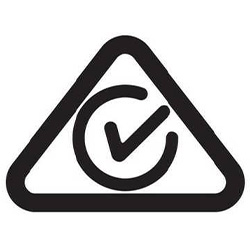
Australian RCM certification
Label printers entering the Brazilian market, ANATEL certification is an essential passport! It is the recognition of the Brazilian Telecommunications Authority for the safety and compliance of electronic products, without which products cannot be legally sold.
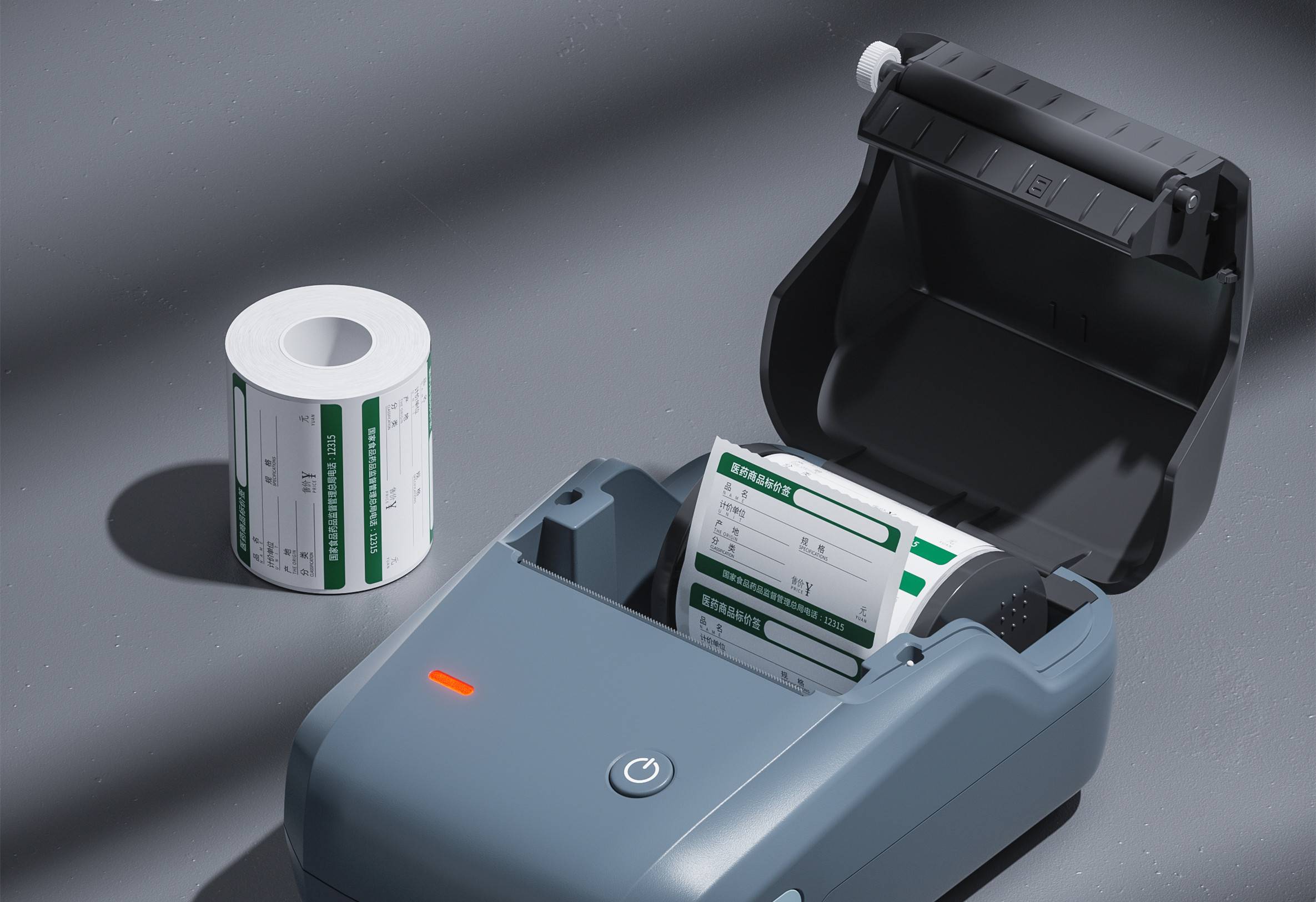
SRRC certification is not only a guarantee of product compliance, but also a key to opening up the market.
Noise pollution is one of the environmental pollutions with greater impact. Higher decibel noise can even cause serious damage to human eardrums and cause hearing loss.
Get a quote

Tik Tok